Wednesday, March 17, 2021

Scrum y DevOps

 La gente quiere ir con DevOps en lugar de Scrum porque quieren ser ágiles pero no pueden cambiar su organización. Muchas personas de la comunidad Agile con las que he interactuado piensan que DevOps solo se trata de herramientas para la entrega continua. Vamos a aprender por qué DevOps no se trata solo de herramientas para la canalización de entrega.

Scrum es solo un marco

Scrum es solo un marco simple para el desarrollo de productos complejos que se basa en valores y principios. Scrum no es una metodología prescriptiva que le dice cómo debe verse su proceso. Scrum está muy centrado en lo que sucede durante el Sprint. Scrum no le dirá cómo debería verse su proceso dentro del Sprint. Scrum es un marco aditivo, lo que significa que Scrum solo te dirá los conjuntos mínimos de lo que necesitas para usarlo. Al igual que cuando necesita instalar un software en su computadora, existe un requisito mínimo para la especificación de la computadora, pero no hay nada de malo en instalar el software en una computadora que esté por encima de la especificación mínima. Entonces, con esta premisa, no es ilegal agregar prácticas que mejoren el flujo de su entrega de valor dentro del Scrum Framework.

free jira alternative

DevOps: Lean Thinking, Systems Thinking y Value Stream Mapping

DevOps comienza con el pensamiento sistémico y ve todo el flujo de valor en el sistema en lugar de enfocarse únicamente en la fase de desarrollo, analizando cómo el trabajo entra en el desarrollo (el flujo ascendente) y cómo los trabajos se entregan a los clientes (el flujo descendente). El pensamiento sistémico ve cómo todos los elementos interconectados del sistema se afectan entre sí. En un sistema complejo como una infraestructura corporativa, los elementos no funcionan de forma aislada. Hacer un cambio en un elemento afectará a otro elemento del sistema.

Un flujo de valor es cómo el procesamiento de las solicitudes de los clientes en un resultado tangible fluye de un elemento a otro en todo el sistema. Siempre que hay una solicitud, hay un flujo de valor en el sistema.

Además del pensamiento sistémico, DevOps también se basa en el pensamiento lean. El pensamiento Lean consiste en reducir el desperdicio en la cadena de valor. Cualquier actividad que no tenga valor agregado puede considerarse desperdicio. No voy a dar más detalles sobre Lean y tipos de desperdicio en este artículo.

El pensamiento Lean, el pensamiento sistémico y el mapeo de todo el flujo de valor son importantes y funcionan bien con Scrum porque Scrum se basa en el pensamiento Lean. Esto es lo que hago antes de comenzar Scrum en una gran corporación, ver todo el sistema de manera integral y mapear todo el flujo de valor en el sistema primero en lugar de solo aplicar Scrum al departamento de TI. Kanban es una buena herramienta para visualizar todo el flujo de valor en el sistema.

Cuando usamos Scrum y DevOps, todas las actividades en el flujo de valor, desde las solicitudes de los clientes y el lanzamiento del producto, hasta los entornos de producción y los clientes, ocurren dentro del Sprint. Esto no significa que un Sprint sea una mini cascada donde la implementación solo ocurre al final del Sprint o todo el análisis ocurre al comienzo del Sprint. Usar Scrum con Kanban ayuda a dejar de usar Sprint como mini cascada y avanzar hacia modelos basados en flujo de una sola pieza en el Sprint.

Scrum Team aplicando DevOps: la composición

Los equipos Scrum que adopten DevOps tendrán una forma de trabajo diferente a la de un equipo Scrum que no adopte DevOps. No solo su forma de trabajar es diferente, la composición del equipo también se ve muy diferente.

Scrum dice que el equipo de desarrollo está formado por profesionales que entregan los incrementos potencialmente liberables al final del Sprint. Dado que DevOps ve todo el flujo de valor y utiliza el pensamiento sistémico, los profesionales de Scrum Teams que adoptan DevOps son todos los que procesan el elemento de la lista de productos pendientes (PBI) en todo el flujo de valor de principio a fin. Mucha gente ve que el equipo de desarrollo solo está formado por desarrolladores, por eso muchos piensan que Scrum es solo para la fase de desarrollo.

En un equipo Scrum que adopta DevOps, la composición del equipo incluye a todos, entre otros, personal de marketing, analistas, diseñadores de UI / UX, desarrolladores, personal de operaciones, administradores de sistemas, científicos de datos e ingenieros de confiabilidad del sitio. Todos trabajan juntos de forma colaborativa como una sola unidad para ofrecer valor a sus clientes.

DevOps se trata más de cultura organizacional que de herramientas

Como puede ver, DevOps no se trata de herramientas y automatización en el proceso de entrega. De hecho, como hemos aprendido, las herramientas y la automatización son solo un tercio de DevOps (yo diría que es incluso menos). En general, DevOps se trata de colaboración y propiedad colectiva, se centra en el flujo de la entrega de valor y la cultura de aprendizaje y experimentación. Pero, lamentablemente, muchos proveedores de herramientas posicionan DevOps como herramientas y procesos para la canalización de entrega (los proveedores que he visto en mi mercado están más enfocados en herramientas, pero su experiencia puede ser diferente a la mía). Esto entusiasmará a la gerencia porque muchos gerentes a los que he conocido piensan que después de comprar e instalar las herramientas "DevOps" sin cambiar su organización, su empresa se volverá ágil al instante. Es como poner el carro delante del caballo.


Tuesday, March 16, 2021

Scrum et DevOps

Scrum et DevOps ne doivent pas nécessairement être un choix qu'une équipe doit faire. Découvrez comment une équipe Scrum peut adopter les pratiques DevOps.

Scrum n'est qu'un cadre

Scrum n'est qu'un simple cadre de développement de produits complexes basé sur des valeurs et des principes. Scrum n'est pas une méthodologie normative qui vous indique à quoi devrait ressembler votre processus. Scrum est très concentré sur ce qui se passe pendant le Sprint. Scrum ne vous dira pas à quoi devrait ressembler votre processus dans le Sprint. Scrum est un framework additif, ce qui signifie que Scrum ne vous indiquera que les ensembles minimums de ce dont vous avez besoin pour l'utiliser. De la même manière que lorsque vous devez installer un logiciel sur votre ordinateur, il y a une exigence minimale pour les spécifications de l'ordinateur, mais il n'y a rien de mal à installer le logiciel sur un ordinateur qui est au-dessus de la spécification minimale. Donc, avec cette prémisse, il n'est pas illégal d'ajouter des pratiques qui amélioreront le flux de votre livraison de valeur dans le cadre Scrum.

open source agile tool

DevOps: Lean Thinking, System Thinking et Value Stream Mapping

DevOps commence par une réflexion systémique et visualise l'ensemble de la chaîne de valeur dans le système plutôt que de se limiter à la phase de développement, en analysant comment le travail entre dans le développement (en amont) et comment les travaux sont livrés aux clients (en aval). La pensée systémique voit comment chaque élément interconnecté du système affecte les uns les autres. Dans un système complexe comme une infrastructure d'entreprise, les éléments ne fonctionnent pas de manière isolée. Faire un changement dans un élément aura un impact sur un autre élément du système.

Une chaîne de valeur est la façon dont le traitement des demandes des clients en un résultat tangible passe d'un élément à un autre élément de l'ensemble du système. Chaque fois qu'il y a une demande, il y a une chaîne de valeur dans le système.

Outre la pensée systémique, DevOps est également basé sur la pensée lean. La pensée Lean consiste à réduire le gaspillage dans la chaîne de valeur. Toute activité sans valeur ajoutée peut être considérée comme un déchet. Je ne vais pas m'étendre sur le Lean et les types de déchets dans cet article.

La pensée Lean, la pensée systémique et la cartographie de l'ensemble de la chaîne de valeur sont importantes et fonctionnent bien avec Scrum car Scrum est basé sur la pensée Lean. C'est ce que je fais avant de démarrer Scrum dans une grande entreprise, de visualiser l'ensemble du système de manière holistique et de cartographier d'abord l'ensemble de la chaîne de valeur dans le système plutôt que d'appliquer uniquement Scrum au service informatique. Kanban est un bon outil pour visualiser l'ensemble de la chaîne de valeur dans le système.

Lorsque nous utilisons Scrum et DevOps, toutes les activités de la chaîne de valeur, depuis les demandes des clients et la sortie du produit, jusqu'aux environnements de production et aux clients, se déroulent dans le Sprint. Cela ne signifie pas qu'un Sprint est une mini-cascade où le déploiement se produit uniquement à la fin du Sprint ou toute l'analyse se produit au début du Sprint. Utiliser Scrum avec Kanban permet de sortir de l'utilisation de Sprint comme mini-cascade et de passer à des modèles basés sur des flux en une seule pièce dans le Sprint.

Équipe Scrum appliquant DevOps: la composition

Les équipes Scrum adoptant DevOps auront une façon de travailler différente de celle d'une équipe Scrum qui n'adopte pas DevOps. Non seulement leur façon de travailler est différente, mais la composition de l'équipe est également très différente.

Scrum dit que l'équipe de développement est composée de professionnels qui fournissent les incréments potentiellement libérables à la fin du Sprint. Alors que DevOps voit l'ensemble de la chaîne de valeur et utilise la pensée systémique, les professionnels des équipes Scrum qui adoptent DevOps sont tous ceux qui traitent l'élément de backlog produit (PBI) dans l'ensemble de la chaîne de valeur de bout en bout. Beaucoup de gens voient que l'équipe de développement est uniquement composée de développeurs, c'est pourquoi beaucoup en viennent à penser que Scrum est uniquement destiné à la phase de développement.

Dans une équipe Scrum adoptant DevOps, la composition de l'équipe comprend tout le monde, mais sans s'y limiter, les responsables marketing, les analystes, les concepteurs UI / UX, les développeurs, les opérateurs, les administrateurs système, les data scientists et les ingénieurs de fiabilité de site. Ils travaillent tous ensemble en une seule unité pour offrir de la valeur à leurs clients.

DevOps est plus une question de culture organisationnelle que d'outils

Comme vous pouvez le voir, DevOps ne concerne pas les outils et l'automatisation dans le pipeline de livraison. En fait, comme nous l'avons appris, les outils et l'automatisation ne représentent qu'un tiers du DevOps (je dirais que c'est encore moins). Dans l'ensemble, DevOps concerne la collaboration et l'appropriation collective, se concentre sur le flux de la livraison de valeur et la culture d'apprentissage et d'expérimentation. Mais malheureusement, de nombreux fournisseurs d'outils positionnent DevOps comme des outils et des processus pour le pipeline de livraison (les fournisseurs dont j'ai été témoin sur mon marché sont plus axés sur les outils, mais votre expérience peut être différente de la mienne). Cela excitera la direction car de nombreux managers que j'ai rencontrés pensent qu'après avoir acheté et installé les outils «DevOps» sans changer leur organisation, leur entreprise sera instantanément agile. C'est comme mettre la charrette devant le cheval.

Sunday, March 7, 2021

Agile vs Scrum

 Waterfall project management is a well-known method in software development, and its basic process is story -> development -> test. It is assumed that the final result is right, if each phase is done correctly. Microsoft uses the Waterfall method and it works well.


However, it has a relatively high failure rate, for the market and requirements are constantly changing. Software pioneers conducted a series of researches, thinkings, and summaries about the problems found in the Waterfall methodology and finally came up with the concept of Agile.

What is Agile?

Agile is an approach that helps one iterate on processes in the Software Development Life Cycle, such as development, testing, and so on. This technique has advantages, including the ability to produce high-value functionality in fast implementation times, which was previously a problem for the traditional waterfall approach. It also helps to enhance customer retention and satisfaction. This is accomplished by splitting down the product into smaller units/builds, allowing the operations to run concurrently. Agile encourages collaboration and face-to-face contact.


Agile Manifesto was release in 2001 by 17 independent-minded software practitioners.While the participants didn't often agree, they did find consensus around four core values.

Individuals and interactions   over processes and tools
Working software   over comprehensive documentation
Customer collaboration   over contract negotiation
Responding to change   over following a plan

Agile approaches include

  • Scrum
  • Kanban
  • Feature Driven Development (FDD)
  • Extreme Programming (XP)
  • Lean Software Development (LSD)
  • Adaptive System Development (ASD)
  • Dynamic Systems Development Method (DSDM)

What is Scrum?

Scrum is a simple and lightweight framework that aids individuals, teams, and organizations in creating value by allowing them to respond to complex problems.


According to Scum Guide 2020,

Scrum requires a Scrum Master to foster an environment where:
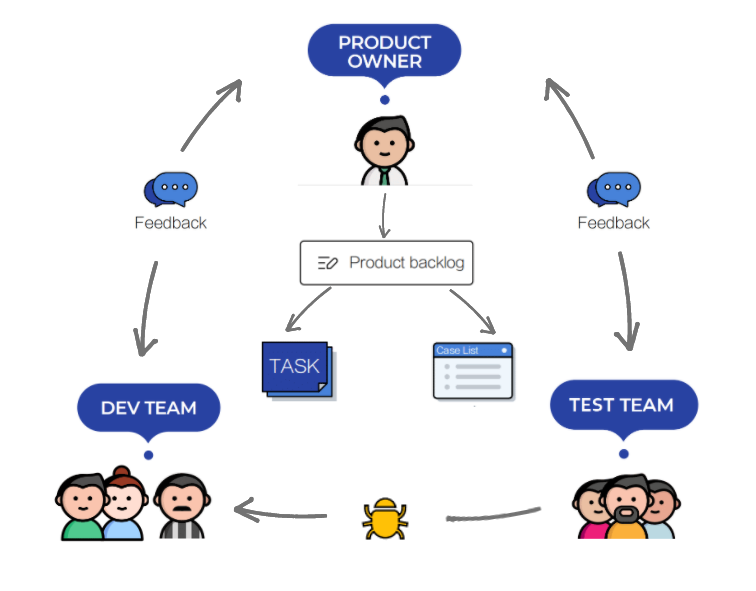
  • A Product Owner orders the work for a complex problem into a Product Backlog.
  • The Scrum Team turns a selection of the work into an Increment of value during a Sprint.
  • The Scrum Team and its stakeholders inspect the results and adjust for the next Sprint.
  • Repeat

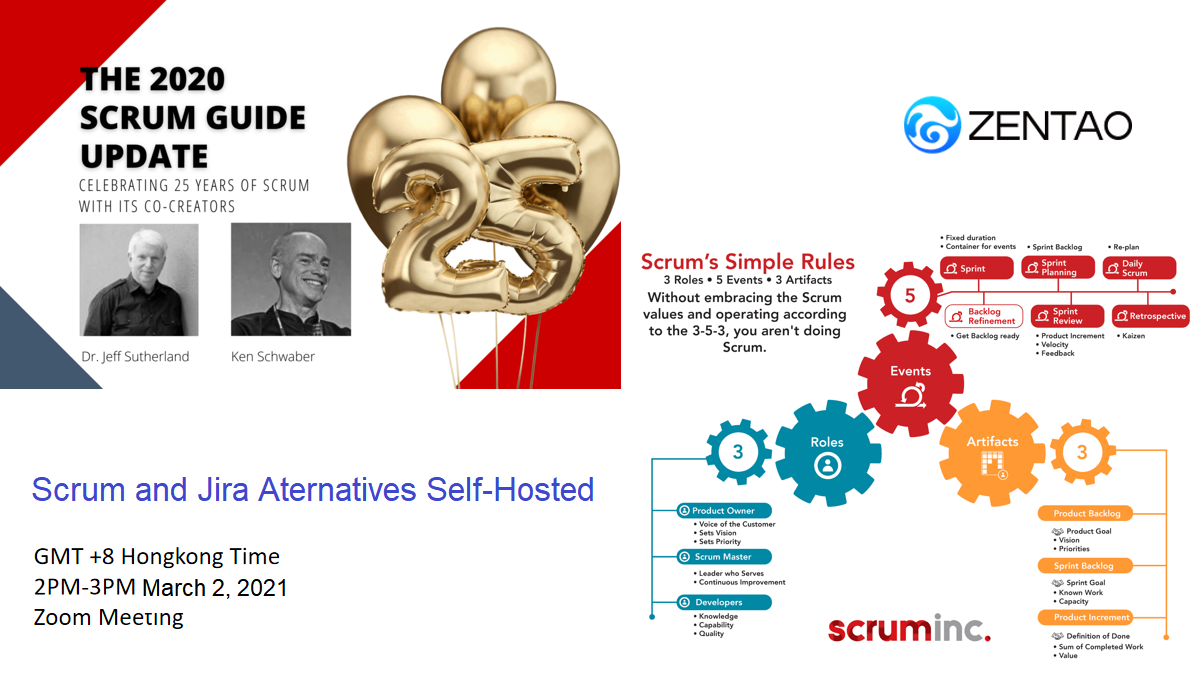
Scrum can be understood in the 3-5-3 structure.

  • 3 roles: Product Owner, Scrum Master and the Team.
  • 5 events: Sprint, Sprint Planning, Daily Scrum, Sprint Review and Sprint Retrospective.
  • 3 artifacts: Product Backlog, Sprint Backlog and Increment.

See also

Agile vs. Scrum

The primary difference between Agile and Scrum is that, while Agile is a project management framework based on a core collection of standards or concepts, Scrum is a specialized Agile approach for project management.         


        Read more HERE.


See also

Monday, March 1, 2021

The Ultimate Guide to Remote Team Collaboration under COVID-19

 Organizational leaders, shareholders, or other stakeholders will not quickly forget Covid-19, and all of the job chaos it has created. Many that were not ready this time will learn what worked and what didn't work and be motivated to close the gaps so that they are better positioned in the future by investors in particular. After Covid-19, what is your work-from-home forecast?


Our best estimate is that 25-30% of the workforce will be working-from-home multiple days a week by the end of 2021.
- Kate Lister, President of Global Workplace Analytics

On March 11, the World Health Organisation declared Covid-19 a pandemic. According to a recent report by Slack, an unprecedented 16 million U.S. knowledge workers moved to operating remotely within a few weeks to help flatten the curve of the health crisis.


A  knowledge worker is anyone who holds an office position and/or works with data, analyzes information or thinks creatively in a typical workweek.

With the global concern about COVID-19, we have all the answers you need in one location if your business is implementing a more structured remote work approach for the first time. These recommendations and best practices will extend to any condition that can prevent or render in-office work difficult (e.g., public transit closures or strikes, weather, disease, etc.).


The most critical things to remember about remote work during the Covid-19 pandemic are:

  • Remote work surge: As of March 27, an estimated 16 million knowledge workers in the United States had begun operating remotely as a result of Covid-19; this figure is undoubtedly even higher now.
  • Remote work experience matters: When workers are new to working from home, productivity and communication is much affected. The positive news is that previous experience is valuable. Many that have worked from home for more than a month have discovered methods and techniques that have enhanced teamwork and job satisfaction.
  • Collaboration tools help: Team collaboration tool users showed a stronger sense of belonging when work remotely. They're much more efficient and less likely to have to struggle with delayed or poor communication.

ZenTao has been a ideal and helpful tool for team collaboration, either self-hosted or in the cloud. In 2020, ZenTao witnessed an increase of remote teams with 20%. ZenTao can help your remote work with:

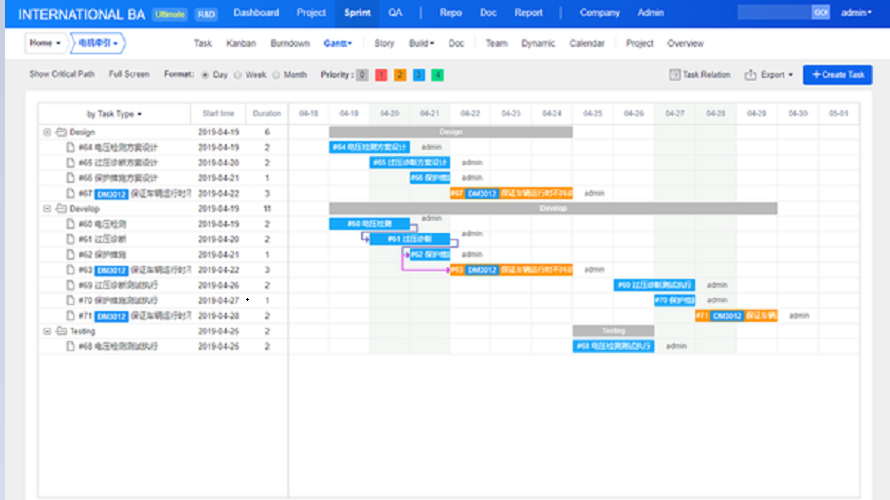
  • task management: todo, calendar, Gantt Chart
  • document management: document library, document online preview and editting
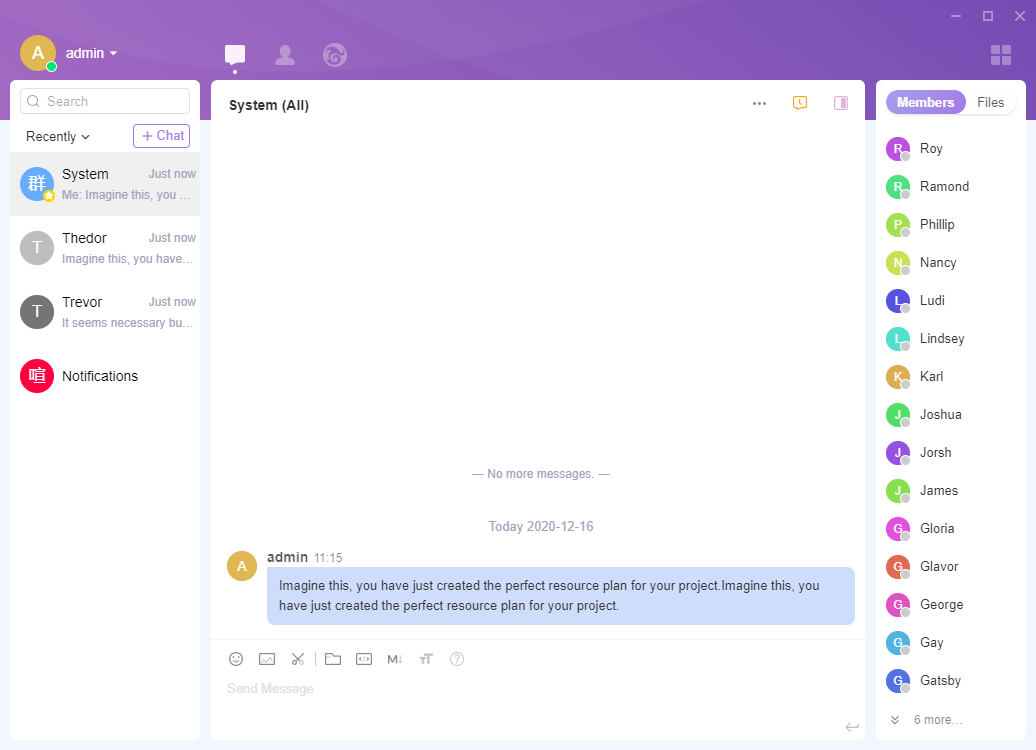
  • messaging: intranet and internet chat, add messages as tasks via ZenTao Desktop
  • audio and video conferencing: screensharing and integration with other systems


See also

REFERENCE

1. https://globalworkplaceanalytics.com/work-at-home-after-covid-19-our-forecast

2. https://www.fuze.com/the-Ultimate-Guide-to-Remote-Work

3. https://slack.com/intl/ja-jp/blog/collaboration/report-remote-work-during-coronavirus           

Monday, February 22, 2021

5 Reasons to Move from Jira to ZenTao


Before we dig down on to consider migration from Jira to ZenTao, let’s start with the basics, for business positions, who might be new to this. We’ll briefly introduce you to Jira, it’s the most popular alternative — ZenTao, and then touch base on the most common reasons, why businesses decided to move from Jira to ZenTao.

What is Jira?

Jira is an issue tracking tool developed by Atlassiann. It is the "#1 software development tool used by agile teams". Jira Software is built for every member of your software team to plan, track, and release great software. Originally, Jira was designed as a bug and issue tracker. But today, Jira has evolved into a powerful work management tool for all kinds of use cases, from requirements and test management to agile software development. 

When you should start looking for Jira alternative?

  1. Your monthly bill is continually increasing.
  2. You don’t use most of the features.
  3. Your team has too many problems with receiving support.
  4. Your account performance is decreasing.
  5. You need to pay extras for each plug-in integration.

What is ZenTao ALM?

ZenTao is an open source project management software for product management, project management, test management, document management, bug tracking, CI management and todo management. It is a professional Application Lifecycle Management(ALM), covering the core process of software development. It is based on Scrum, a popular Agile framework that is very pragmatic and easy to implement. It fits the fast iterative development of software projects. ZenTao self-hosted and Cloud are both available.

What are the reasons to migrate from Jira to ZenTao?

Unlike Jira, you could directly use built-in features in ZenTao without paying extras for plug-ins, such as Document Management, Gantt Charts, Effort Management and SVN/GIT repositories. ZenTao has more to offer than that, so read on the following reasons that you should migrate from Jira to ZenTao.

1. Affordable and reasonable pricing with best I/O

Jira pricing is nice for small teams, but the subscription starting from $70 per user monthly. It could be a big chunk of cost to your team. If you look at the pricing and features of ZenTao, you will find it worth what it offers. For all ZenTao Biz features, it is only $32.9 per user annually. You can find more plans for ZenTao self-hosted HERE and Cloud HERE.

2. Must-have features for application lifecycle management

ZenTao is a solution for the application lifecycle. It starts from the user story management(PBI management) and planning of a product development, to the testing, releasing and feedback of the project. It is especially for agile teams aiming for fast delivery and feedback.


3. Fast support via Zoom meeting, 1-ON-1 remote support, and emails

ZenTao support team serves users from all over the world. For new users, they have bi-weekly online introduction Zoom meeting. You can find information on the latest one scheduled on Feb 2, 2021 HERE. You can also schedule a demo with the team HERE. The average response time of the team is 24 business hours if you send an email asking for support.

4. Rapid loading and stable performance

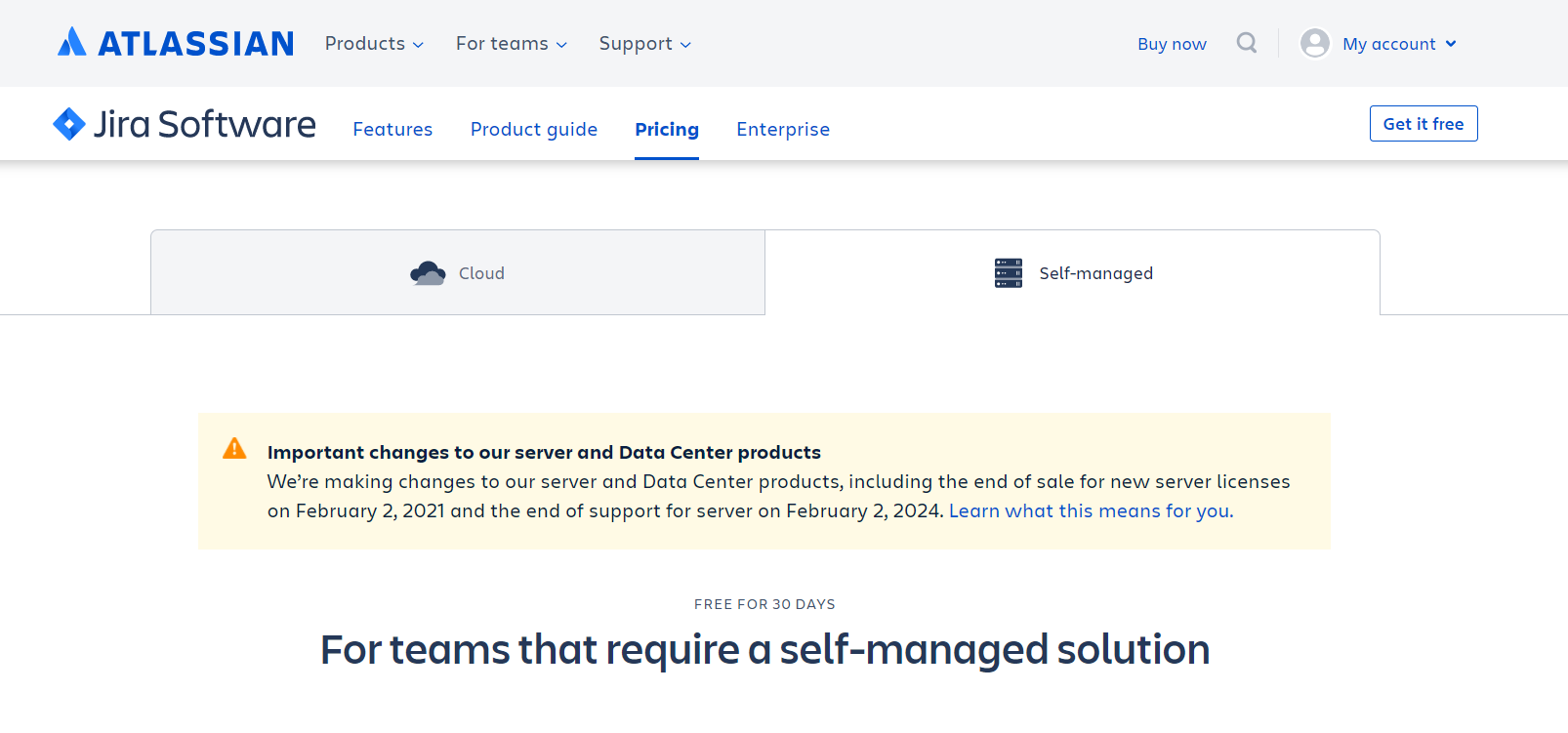
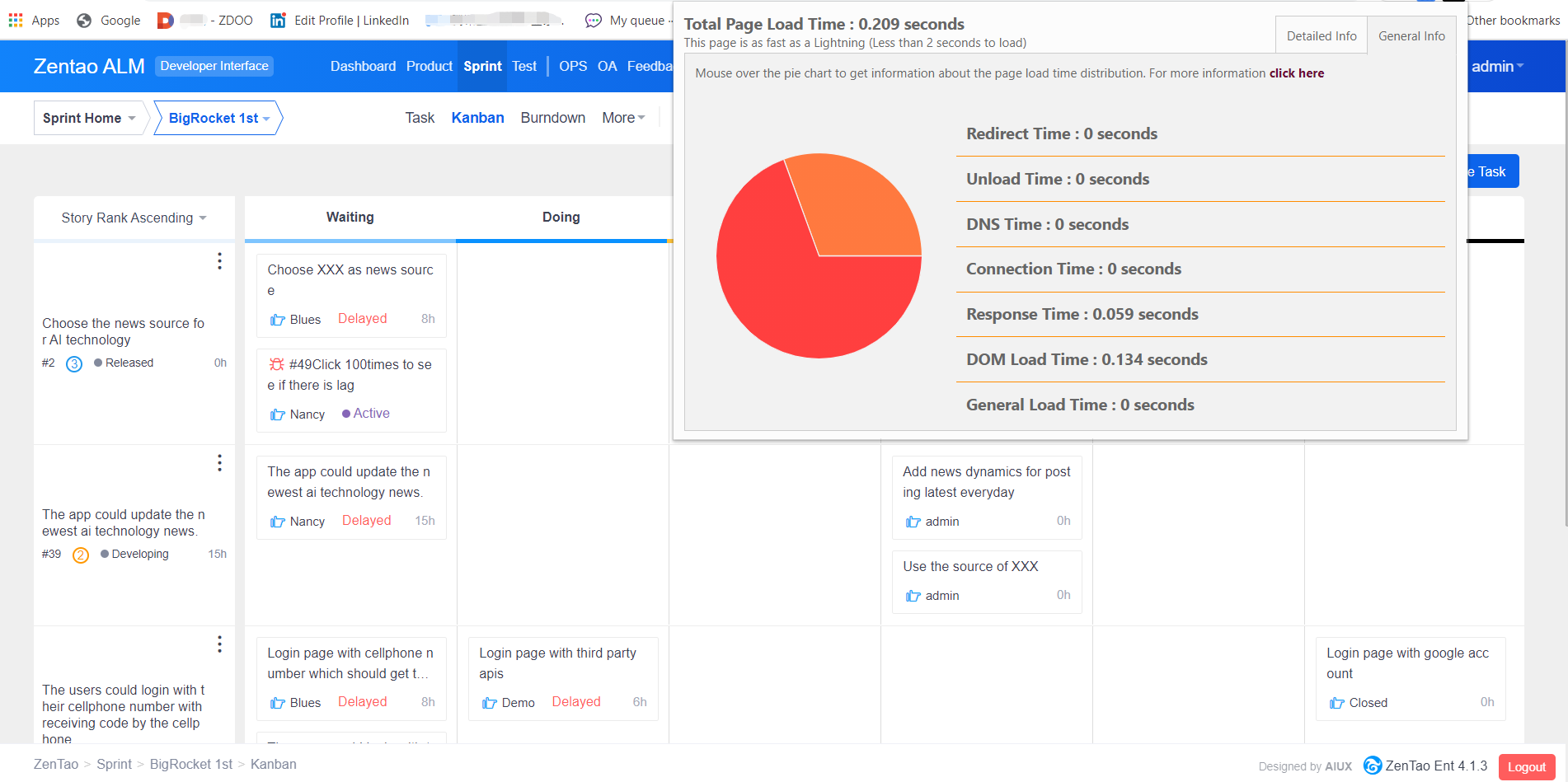
Unlike Jira which is complained as loading too low, ZenTao can be self-hosted, so it is more in the users' hand. Also, the average page loading time of ZenTao is within 0.5 seconds. But it’s not the interface that slows down your Jira account, but instead all SaaS applications. That’s why Jira users are looking for on-premise alternatives, especially when Jira announced their server and data center products are stopped on Februrary 2, 2021. 

5. No locked in by features

If you ever used Jira, you would know that almost every feature a development team needs can be integrated in Jira, such as Confluence, Slack, BitBucket, etc. The other side of the coin is that you have to buy the apps separately and then integrate it one by one. ZenTao has document management, instant messenger, CI features and such all built-in. You just pay it once and for all. You can check the features of ZenTao Biz HERE.


For feature comparison charts and details, read Agile Tool-ZenTao ALM vs. Jira Software.


Reference

1. https://confluence.atlassian.com/jirakb/troubleshoot-long-page-load-times-in-jira-server-959307746.html

2. https://community.atlassian.com/t5/Jira-questions/Why-is-JIRA-so-slow/qaq-p/295649             

Wednesday, February 17, 2021

Online Event - Scrum and Jira Alternatives Self-Hosted - March 2, 2021


The event will walk you through Scrum basics, including the 3-5-3 structure, and demonstrate how ZenTao, a software lifecycle management tool, can help your team implement Scrum as a good fit for agile teams and a free Jira alternative self-hosted.


Scrum is an agile framework for developing, delivering, and sustaining complex products, with an initial emphasis on software development. It is designed for small teams to break their work into goals that can be completed within a sprint, aka a time-boxed iteration. ZenTao is an open source project management software, and its features are product management, project management, test management, document management, bug tracking, CI management and todo management. It is a professional Application Lifecycle Management(ALM), covering the core process of software development. Join us to know this amazing Scrum tool.

Highlights

  • What is Scrum
  • The 3-5-3 structure of Scrum
  • How ZenTao supports Scrum implementation
  • Q&A on ZenTao
Tue, 02 Mar
03:15 AM•Asia/Shanghai
Session
Closing Activity
FAQ and free trial acceptance
Tue, 02 Mar
02:00 PM•Asia/Shanghai
Session
Opening Speech
Tue, 02 Mar
02:15 PM•Asia/Shanghai
Session
Scrum ABCs
Scrum Guide reading and examples
Tue, 02 Mar
02:45 PM•Asia/Shanghai
Session
ZenTao Demo
Demonstrate the workflow in ZenTao to implement Scrum.


Event Type

Online Zoom Meeting

How to join the event

You can leave a comment below to request the Zoom Meeting link to join. 

Sunday, February 7, 2021

What are the Product Owner role and his responsibilities?

Scrum Guides explanation of the Product Owner role is "responsible for maximizing the value of the product resulting from work of the Development Team'‘. The way how to perform his duty can be divided into two parts:

  • Managing the Product Backlog; and
  • Collaborate with the Team.

Manage the Product Backlog

The Product Backlog is a list of requirements needed for the product. The Product Backlog items are prioritized by the Product Owner, and anyone could add items to it. The scope of the Product Backlog management include

  • Clearly describe Product Backlog items;
  • Decide the priority of Product Backlog items; 
  • Optimize the quality of the work done by the Development Team;
  • Ensure the transparency of the Product Backlog and the Development Team understand it as required

Although anyone of the Scrum team can add items to the Product Backlog, only the Product Owner can decide what will be included in it for the Development team to achieve. The Product Backlog refinement is introduced to review and revise the items. 

Collaborate with the Team

The Product Owner is accountable for the work delivered by the Team. So he is responsible for defining the vision for the Team to visualize the expectation by a product roadmap. The Product Owner also acts as a liaison between the Team and the stakeholders. He ensures the Team understand the requirements and interact and collaborate with them on delivering the quality. He is equally important in communicating with the stakeholders about the goals.


The way that the Product Owner work with the Team also includes

  • Monitor the progress of team backlog item in each Sprint;
  • Participate in Scrum meetings, including Sprint Planning, Sprint Review and Sprint Retrospective;
  • Inspect and adapt to impediments the Team encounter

Challenges for the Product Owner


The Product Owner is a person, not a committee, so it is not easy for just one person to make decisions for the whole team. The product is facing challenges from both the inside and the outside of the Team. Common pitfalls might be

  • The missing product roadmap
  • Priority change in the progress of doing a Sprint
  • Acceptance criteria overly set
  • Too much time spent on support rather than the Product Backlog.

The skills required for being a competent PO is to be knowledgeable about the product, extremely communicative, and agile. He also has to be a great storyteller and an issue solver who always has the final say to things. If you have any ideas, feel free to comment below.

Related Reading

Reference

  1. https://www.scrumguides.org/scrum-guide.html#team-po
  2. https://www.agilealliance.org/glossary/product-owner/
  3. https://www.scrum.org/resources/what-is-a-product-owner
  4. https://www.scaledagileframework.com/product-owner/
  5. https://www.mountaingoatsoftware.com/agile/scrum/roles/product-owner

Guide du débutant sur la gestion de projet Scrum 2021

 En ce qui concerne la nomenclature, les débutants peuvent être perplexes. Lorsque vous atteignez cette culture pour la première fois, les t...